July 5, 2026 · Mahjong Runway
Mahjong Made Easy: Lets Get Playing!
Everything you need to know to start playing mahjong, from basic rules to winning strategies.
Have you been wanting to learn the game of American Mahjong? If you've been eyeing those beautiful tiles and wondering how to dive in, you're in the right place.
We're here to strip away the confusion and make learning American Mahjong simple, approachable, and fun. While the game has deep cultural roots and rich traditions, today's American Mahjong is also about gathering with friends, sharing laughs, and creating traditions of your own.
Ready to play? Here's your guide to the essentials.
1. The Must-Have Accessory: The NMJL Card
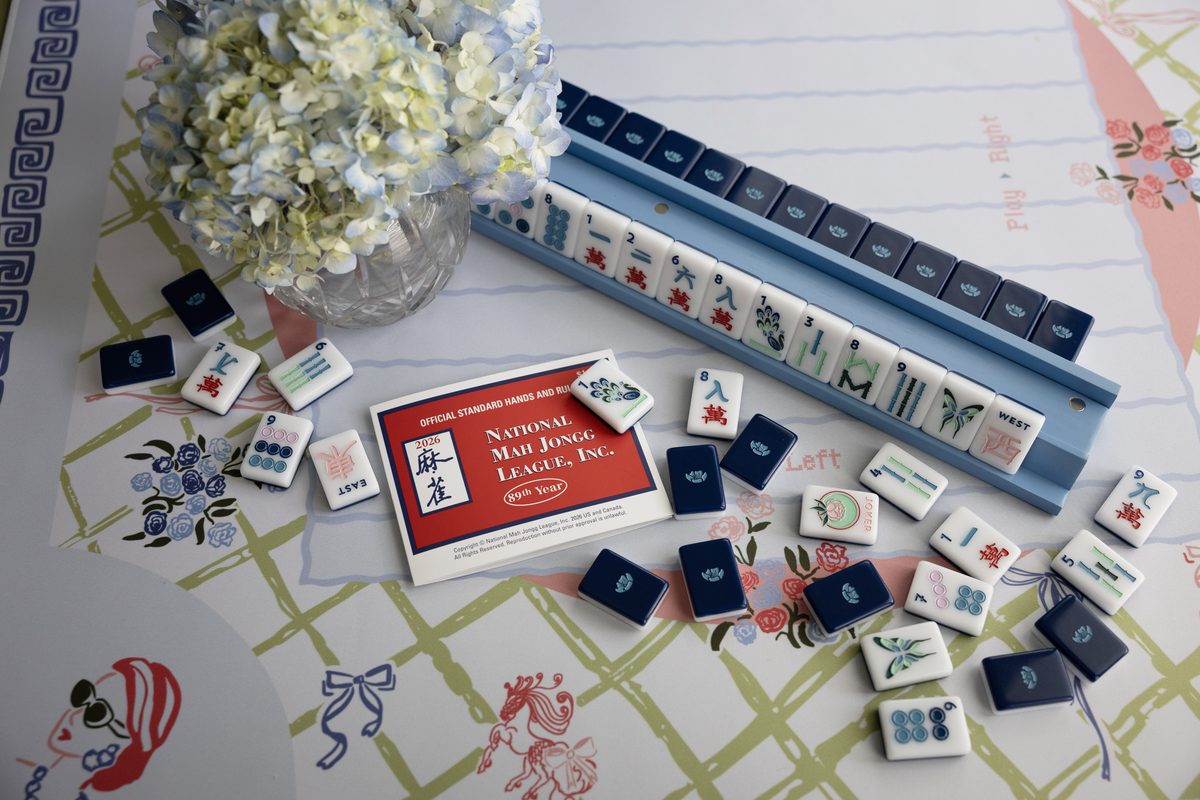
The National Mah Jongg League (NMJL) card is your ultimate style guide. Think of it like a seasonal lookbook. It changes every year and features every winning hand you can build.
Don't worry about memorizing it. Keep the card in front of you while you play, and over time you'll naturally learn the sections, patterns, and strategies. Your fellow players (or a local teacher) are usually more than happy to help along the way.
Before you know it, you'll be matching tiles to the patterns and building your first winning hand.
2. Get to Know the Tiles
Before you start playing, it's helpful to recognize the different suits and other tiles you'll see on the table.
Bams (Bamboo)
Recognizable by bamboo stalks and greenery. The 1 Bam is often represented by a bird and, at many tables, is the perfect excuse to raise a glass and say "cheers!"
Dots
Circular dot patterns numbered 1 through 9.
Cracks (Characters)
Chinese characters paired with Arabic numerals.
Honor Tiles
The Winds (North, South, East, and West) and the Dragons (Red, Green, and White, also known as "Soap," which represents zero on the card).
Flowers
Flowers are interchangeable and represented by the letter "F" on the NMJL card.
Jokers
Wild cards that can help complete many hands (with a few important rules you'll learn as you play).
A standard American Mahjong set contains 152 tiles:
- Four of each numbered tile (1 through 9) in each suit
- Four of each Wind
- Four of each Dragon
- Eight Flowers
- Eight Jokers
Runway Tip: Many tile sets include a quick reference card showing every tile. Spend a minute looking through your set before your first game—you'll feel much more confident once play begins.
3. Setting the Stage: Building the Walls
American Mahjong is played with four players.
To begin, everyone works together to build four walls, each two tiles high and nineteen tiles long.
The dealer, known as East, rolls the dice to determine where the wall will be broken. After counting over the appropriate number of tiles, the wall is pushed out at a diagonal ("broken"), and each player takes turns drawing sets of four tiles until everyone has thirteen tiles. East starts with fourteen tiles and makes the first discard to begin the game.
4. The Charleston: The Social Exchange
Before the game officially begins, you'll complete The Charleston, one of the most unique and social parts of American Mahjong.
During the Charleston, players pass groups of three tiles to one another in a series of rounds (plus an optional courtesy pass) to improve their starting hands.
Think of it as editing your wardrobe before a big event. You're trading away the tiles you don't need in hopes of receiving ones that bring your hand together. It's fast-paced, interactive, and one of the most enjoyable traditions in the game.
Rumor has it that The Charleston was named that because that was the popular dance at the time Americans first started playing Mahjong.
5. Playing Your Hand (And Mastering the Joker)
The goal of American Mahjong is to build one of the winning hands shown on the NMJL card.
Draw and Discard
On each turn, you'll draw one tile and discard one tile, gradually building your hand. If another player discards a tile you need, you may be able to call it, expose the matching tiles on your rack, and continue building your hand.
The Joker
Jokers are wild cards that can stand in for many tiles in a pung (three of a kind), kong (four of a kind), quint, or sextet. If another player has exposed a Joker and you're holding the tile it represents, you can exchange your tile for their Joker during your turn. It's called a "joker exchange" (and you have to ask nicely!).
As you continue playing, you'll naturally learn strategy, defensive play, and how to read the NMJL card more confidently.
Runway Tip: The back of your NMJL card includes a helpful quick-reference guide that's perfect for newer players with questions, and seasoned players trying to "win their case."
Why You'll Love American Mahjong
American Mahjong is equal parts strategy, tradition, and connection.
Don't worry about learning every rule at once. Each mistake is a lesson that you'll build on for the next game. Focus on recognizing the tiles, keeping your NMJL card nearby, and enjoying the rhythm of the game. Every player was once a beginner, and you'll be surprised how quickly everything starts to click.
Watch out...once you call your first "Mahjong!", it just might become your whole personality!
Ready to Build Your Dream Table?
Now that you're learning the game, it's time to build a tablescape you'll love playing around.
Take our Mahjong Style Quiz to discover the tiles, mats, racks, and accessories that fit your personal style, then explore Style Studio to create your perfect tablescape.
At Mahjong Runway, we're here to help you discover products from your favorite brands, compare styles, and build a table that's uniquely yours.
Style. Shop. Play.
Want to Learn More?
The back of your NMJL card is one of the best resources for beginners, and there are wonderful books, instructors, local leagues, and online communities ready to help as you continue your American Mahjong journey. The more you play, the more you'll discover why so many people fall in love with this timeless game.